
The Youngevity Mindset: 6 Astonishing Mind-Body Studies – by Jayney Goddard MSc, PG Dip Ed, FCMA, FRSM. President, The Complementary Medical Association.
Last week we explored how food, movement, sleep and breathwork measurably turned back the epigenetic clock. This week I want to take you somewhere even more surprising – because there is a growing body of research suggesting that one of the most powerful longevity tools you possess doesn’t sit on your plate or in your gym bag at all. It sits between your ears. This is your longevity mindset!
I have long argued that how we think about ageing shapes how we experience ageing – it is the beating heart of what I call the Youngevity Mindset. But this is not wishful thinking or motivational fluff. Over more than four decades, Harvard psychologist Professor Ellen Langer and researchers inspired by her work have produced a series of genuinely astonishing experiments showing that beliefs, expectations and even our perception of time can produce real, measurable changes in the body. Let me take you through six of the most remarkable – and then show you how to put the counterclockwise mind to work in your own life.
1. The Retreat That Started It All
In 1979, Langer ran what has become one of the most talked-about experiments in psychology. A group of men in their late seventies spent a week at a retreat meticulously staged to recreate the world of twenty years earlier – the music, the newspapers, the television, the conversations. Crucially, they were asked not to reminisce about that time but to live as though it were the present, speaking of two-decade-old events as current news.
By the end of the week, Langer reported improvements in the men’s hearing, memory, grip strength, posture and joint flexibility – and independent observers judged them to look visibly younger. The study was small and, it must be said, was never published in full in a peer-reviewed journal; Langer describes it in her book Counterclockwise. But as a proof of concept it lit a fuse that has been burning through psychology ever since: when the mind is placed in a younger context, the body appears to follow.
2. The Chambermaid Study: Believing Is Becoming
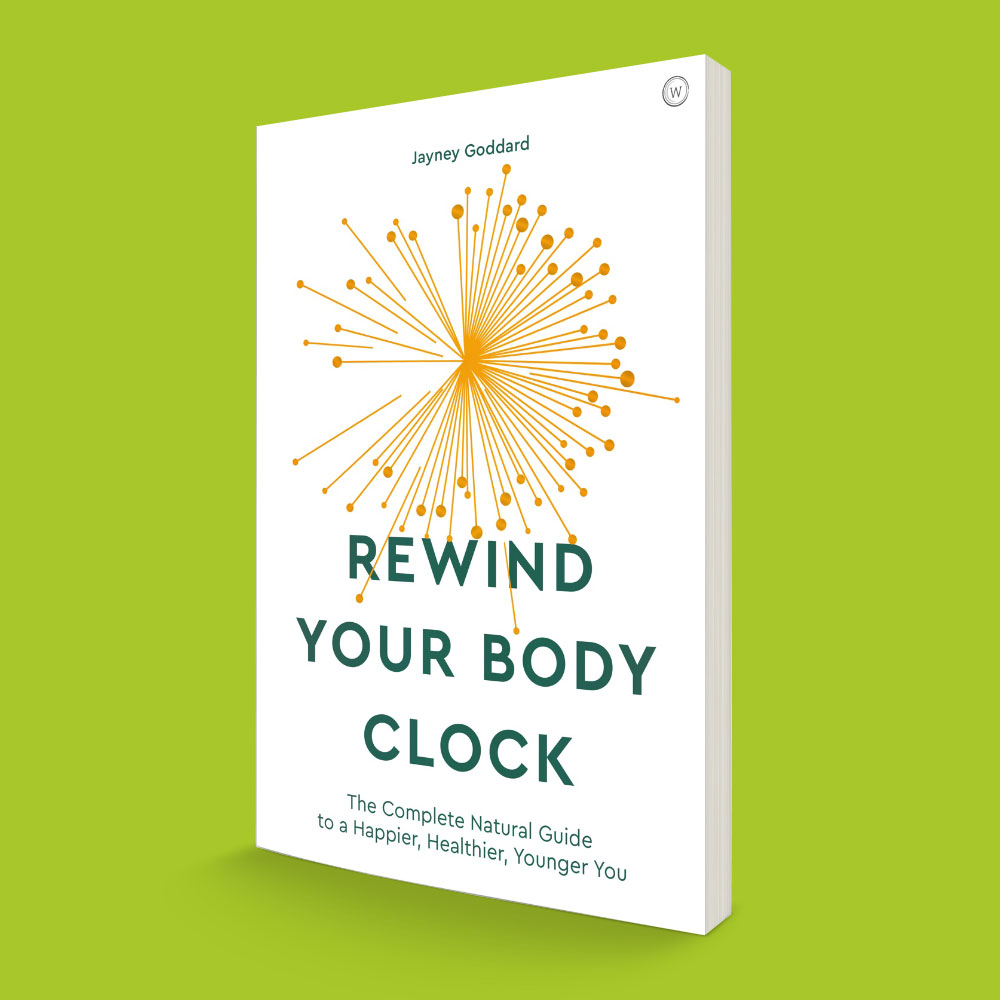
Fast-forward to 2007, when Langer and Alia Crum published a study that remains one of my favourites in all of health psychology1 and I write about this in my book “Rewind Your Body Clock: The Complete Natural Guide to a Happier, Healthier, Younger You”. They studied 84 hotel room attendants – women whose daily work involved substantial physical effort, yet most of whom believed they got no real exercise at all.
Half were simply informed that their daily work already met official recommendations for an active lifestyle, with examples of how many calories each task burned. The other half were told nothing. Four weeks later – with no measured change in their actual behaviour – the informed group showed reductions in weight, blood pressure, body fat, waist-to-hip ratio and body mass index compared with the controls.1 Same work, same bodies; the only thing that changed was what they believed about it.
3. Blood Sugar That Follows the Clock on the Wall
In 2016, Langer’s team at Harvard published an elegant and rather cheeky experiment in PNAS. Forty-six people with type 2 diabetes completed simple tasks over 90 minutes while glancing at a clock – except the clock had been secretly altered to run fast for some participants and slow for others.2
The result? Blood glucose levels changed in line with how much time participants believed had passed, rather than how much time had actually passed.2 Read that again: a process as seemingly mechanical as blood sugar regulation bent towards perception. A 2020 follow-up found something similar with food itself – when people with type 2 diabetes drank identical beverages labelled as either high-sugar or sugar-free, their glucose responses tracked the label more than the actual sugar content.3
4. Wounds That Heal at the Speed of Perceived Time
Then, in 2023, came the study that made headlines around the world. Langer and Peter Aungle gave 33 volunteers standardised minor bruises (using gentle cupping) and then manipulated their perception of time in the laboratory. Each person experienced three conditions of identical real length – 28 minutes – engineered to feel like 14 minutes, 28 minutes or 56 minutes.4
Healing tracked perceived time: the more time participants believed had passed, the more their wounds had visibly healed, even though the actual elapsed time was identical in every condition.4 If perception can influence something as concrete as tissue repair, we are obliged to take the mind seriously as a physiological force.
5. The Beliefs That Added Seven and a Half Years
Perhaps the most striking numbers of all come from Yale epidemiologist Professor Becca Levy, whose work builds a bridge between Langer’s laboratory findings and real lives lived over decades. Following 660 adults aged fifty and over for more than two decades, Levy’s team found that those with more positive views of their own ageing lived, on average, 7.5 years longer than those with more negative views – an advantage that held even after accounting for age, gender, socioeconomic status, loneliness and baseline health, and one partially explained by a stronger will to live.5
Seven and a half years. For perspective, that is a larger longevity gap than is typically associated with many celebrated physical interventions – attached simply to how people thought about growing older.
6. Ageing Itself Is More Fluid Than We Thought
And here is where the mind story joins hands with last week’s methylation story. Research published in Cell Metabolism has shown that biological age is not a one-way ratchet: it rises measurably during periods of intense physiological and psychological stress, and recovers when the stress resolves.6 Ageing, at the molecular level, ebbs and flows – which means the calm, engaged, expectant state of mind that Langer’s work cultivates is not merely pleasant. It is plausibly acting on the very same biology the methylation trials moved with food and exercise.
Putting the Counterclockwise Mind to Work
Audit your ageing language. Notice every time you say “I’m too old for that,” “senior moment,” or “at my age…” These are not harmless jokes; they are instructions. Swap them for the language of capability.
Reframe what you already do. The chambermaid study’s deepest lesson: gardening, housework, carrying shopping, playing with grandchildren – this is genuine exercise, and believing so appears to amplify its benefits. Own it.
Curate your cues. Langer’s work suggests we absorb age signals from our surroundings. Fill your environment with engagement, novelty and things that make you feel vital – music you love, challenges that stretch you, people who expect much of you.
Expect capability, then act on it. Take the stairs. Lift the heavier bag. Learn the new skill. Each act is both a consequence of a younger mindset and a deposit into it – a beautifully virtuous circle.
Notice, mindfully. Langer defines mindfulness simply as the act of noticing new things. Actively look for what is different today – in your body, your garden, your loved ones. Attention, in her framework, is the engine of the whole effect.
A Word of Scientific Honesty
As ever, let me be straight with you about the limits. Several of these studies are small – 33 volunteers here, 46 there – and the famous Counterclockwise retreat was never fully published in a peer-reviewed journal. The wound-healing findings have drawn methodological critique and await independent replication. Levy’s remarkable 7.5-year figure comes from observational research, which shows association rather than proof of cause. And none of this means you can think your way out of the need for resistance training, a plant-rich plate, sleep and human connection – those remain the foundations, with mindset as the amplifier that helps you apply them consistently and joyfully.
But taken together, the pattern across four decades, multiple laboratories and wildly different outcomes – blood sugar, body composition, tissue healing, lifespan itself – points in one consistent direction: the body listens to the mind far more closely than our medicine has traditionally assumed. And unlike so much in health, this intervention costs nothing, carries no side effects, and is available to every one of us, starting this very moment. by working on your outlook and approach to life, you too can develop a Youngevity Mindset – and in doing so, your physical body will follow suit.
Did you know… that I work personally with a small number of private clients each year? If you would love to build both the physical foundations and the mindset practices of healthy longevity into your daily life – a longevity plan that is truly right and tailored just for you – my Concierge Service may be exactly what you are looking for. Discover how to work with me through my 1-2-1 Concierge Service →
Frequently Asked Questions
Can your mindset really affect how you age?
A substantial body of research suggests it can, and Jayney Goddard calls this the “Youngevity Mindset”. Experiments have shown that beliefs and expectations can influence measurable outcomes including blood pressure, body composition, blood glucose and wound healing, while long-term observational research has linked positive views of one’s own ageing with an average of 7.5 additional years of life. Mindset works best alongside, not instead of, physical foundations such as exercise, nutrition and sleep.
What is the Counterclockwise study?
The Counterclockwise study was Ellen Langer’s 1979 experiment in which men in their late seventies lived for a week in an environment recreating the world of twenty years earlier, behaving as though that time were the present. Langer reported improvements in hearing, memory, strength and flexibility. The study was small and described in her book rather than fully published in a journal, but it inspired decades of subsequent mind-body research.
What is psychological age?
Psychological age refers to how old a person feels and believes themselves to be, as distinct from their chronological age (years since birth) and biological age (the condition of their cells and tissues). Research suggests psychological age is not merely a feeling: perceptions and expectations about ageing appear to influence physiological outcomes and are associated with long-term health and longevity.
How can I develop a younger mindset?
Evidence-informed approaches include replacing limiting age-related language, recognising everyday activity as genuine exercise, surrounding yourself with engaging and novel cues rather than “elderly” ones, acting on expectations of capability, and practising mindfulness in the sense of actively noticing new things. These practices complement, rather than replace, physical foundations such as resistance training and a nutrient-rich diet. Jayney Goddard calls this “The Youngevity Mindset”.
References
- Crum AJ, Langer EJ. Mind-set matters: exercise and the placebo effect. Psychological Science. 2007;18(2):165–171. https://doi.org/10.1111/j.1467-9280.2007.01867.x
- Park C, Pagnini F, Reece A, Phillips D, Langer E. Blood sugar level follows perceived time rather than actual time in people with type 2 diabetes. Proceedings of the National Academy of Sciences. 2016;113(29):8168–8170. https://doi.org/10.1073/pnas.1603444113
- Park C, Pagnini F, Langer E. Glucose metabolism responds to perceived sugar intake more than actual sugar intake. Scientific Reports. 2020;10:15633. https://doi.org/10.1038/s41598-020-72501-w
- Aungle P, Langer E. Physical healing as a function of perceived time. Scientific Reports. 2023;13:22432. https://doi.org/10.1038/s41598-023-50009-3
- Levy BR, Slade MD, Kunkel SR, Kasl SV. Longevity increased by positive self-perceptions of aging. Journal of Personality and Social Psychology. 2002;83(2):261–270. https://doi.org/10.1037/0022-3514.83.2.261
- Poganik JR, Zhang B, Baht GS, et al. Biological age is increased by stress and restored upon recovery. Cell Metabolism. 2023;35(5):807–820. https://doi.org/10.1016/j.cmet.2023.03.015
About the Author
Jayney Goddard MSc, PG Dip Ed, FCMA, FRSM is the Founder and President of The Complementary Medical Association (The CMA), the world’s leading professional body for complementary medicine. With more than three decades at the forefront of complementary and integrative healthcare, Jayney has dedicated her career to raising professional standards across the sector and to championing rigorous, evidence-based natural approaches to health and longevity. She is the author of several best-sellers, including Rewind Your Body Clock – the Complete Natural Guide to a Happier, Healthier, Younger You (Watkins/Penguin Random House), which debuted on the Amazon charts at No. 1 among ALL books on the platform. Jayney is a sought-after international speaker and a passionate advocate for the safe, ethical integration of complementary medicine within mainstream healthcare. Through The CMA, she supports a global community of Practitioners, Fellows, and Approved Suppliers committed to the very highest standards of practice.
Further Reading
- Methylation and Biological Age: 5 Powerful Lessons from the 8-Week Trials
- Five Remarkable Health Benefits of Awe
- Muscle and Longevity
- Nootropics: Can They Truly Sharpen Your Mind?
Medical disclaimer: This article is for educational purposes only and does not constitute medical advice. Always consult a suitably qualified healthcare professional before making significant changes to your diet, exercise routine or supplement regimen, particularly if you have an existing health condition, are pregnant, or are taking medication. If you have diabetes, never alter your monitoring or medication on the basis of the research described here.