
Methylation and Biological Age: 5 Powerful Lessons from the 8-Week Trials by Jayney Goddard
Imagine being told that in just eight weeks – without a single drug, without anything experimental or exotic – a group of ordinary adults measurably turned back their biological clocks. Not how young they felt. How young their DNA said they were. That is precisely what a small but landmark randomised controlled trial reported, and it remains, to my mind, one of the most exciting findings in the entire field of natural longevity. The intervention? A carefully designed programme of food, movement, sleep and breathwork – the very foundations that regular readers of this blog will recognise as the pillars of everything I teach. Today I want to walk you through what these remarkable “methylation diet” studies actually found, what the participants really did, and – just as importantly – what the science does and does not yet allow us to claim. Because the truth here is genuinely thrilling, and it doesn’t need a shred of exaggeration.
First, What Do We Mean by “Biological Age”?
Your chronological age is simply the number of birthdays you have celebrated. Your biological age is something far more interesting: a measure of how old your body actually is at the cellular level – and, crucially for our purposes, how well it is likely to function in the years ahead. Two people can share a birth year yet be a decade apart biologically, which is why biological age has become such a valuable lens for thinking about healthspan – the years we spend healthy, capable and thriving.
One of the most robust ways scientists estimate biological age is through DNA methylation. Methylation is a natural process in which tiny chemical tags (methyl groups) are attached to our DNA, switching genes on and off rather like dimmer switches. As we age, the pattern of these tags changes in predictable ways. In 2013, geneticist Steve Horvath showed that by reading the methylation pattern at a few hundred sites on the genome, one can estimate a person’s age with striking accuracy across almost every tissue in the body – the famous “epigenetic clock.”1
Here is the part that should make you sit up: unlike your genes themselves, your methylation pattern is modifiable. It responds to what you eat, how you move, how you sleep and how you handle stress. Which raises an irresistible question – if lifestyle can shift the pattern, can lifestyle turn the clock back?
The Trial That Changed the Conversation
In 2021, Dr Kara Fitzgerald and colleagues published a pilot randomised controlled trial in the journal Aging designed to answer exactly that question.2 Forty-three healthy men aged 50 to 72 were randomly assigned either to an eight-week diet and lifestyle programme or to a control group who carried on as normal. Biological age was measured before and after using the Horvath clock.
The results were extraordinary. Men in the intervention group scored an average of 2.04 years younger at the end of the programme than at the beginning. The control group, meanwhile, drifted in the other direction, scoring roughly a year older. Compared with the controls, the intervention was associated with a 3.23-year reduction in biological age – in eight weeks.2
The programme also delivered old-fashioned, measurable health wins: triglycerides fell by a quarter, and blood folate – a key methylation nutrient – rose significantly.2 To the best of the authors’ knowledge, this was the first randomised controlled study to suggest that diet and lifestyle alone might reverse epigenetic ageing in healthy adults.
And Then Came the Women
The obvious question – does this work for women too? – was addressed in a 2023 follow-up. Six women aged between 45 and 65 completed the same style of eight-week methylation-supportive programme, this time with biological age measured from blood samples.3
Five of the six women reduced their biological age – by anywhere from just over one year to a remarkable eleven years. On average, the group’s biological age fell from 55.8 to 51.2 years: a mean reduction of 4.6 years.3 Intriguingly, most of these women were already biologically younger than their chronological age when they started – suggesting the improvements were not simply a matter of correcting poor health, but of influencing the underlying machinery of ageing itself.
A case series of six is not a randomised trial, and we must hold it more lightly. But taken together, the two studies tell a wonderfully consistent story: the epigenetic clock listens to how we live.
What Did the Participants Actually Do?
This is where it gets truly practical, because the programme was built almost entirely from things you can begin this week.
A methylation-supportive, plant-rich plate
The heart of the intervention was food chosen to supply the raw materials of healthy methylation – methyl donors and their cofactors – together with an abundance of polyphenols, the plant compounds that help regulate where those methyl groups are placed. In practice this meant daily servings of dark leafy greens and cruciferous vegetables (think kale, rocket, broccoli and cabbage), colourful vegetables, beetroot, and seeds such as pumpkin and sunflower, alongside other nutrient-dense wholefoods, while cutting right back on sugar and refined carbohydrates. Those of us who favour a plant-forward table will notice how naturally the template adapts: greens, beets, seeds, pulses and berries carry the overwhelming majority of the methylation-supportive load.
Movement, every day
Participants were asked to exercise for at least 30 minutes a day, at least five days a week, at a moderate-to-brisk effort. Exercise is itself a powerful epigenetic signal – research has shown that even a single session of vigorous activity begins remodelling methylation patterns in muscle.4 And if I may add my own editorial note, honed over three decades in this field: please make sure a good portion of that movement is resistance training. Muscle is your metabolic engine and your longevity organ, and lifting, pressing and pulling deserve pride of place in any age-reversal strategy – with everything else, supplements included, playing the supporting roles.
Sleep and breath
The programme prescribed a minimum of seven hours of sleep each night, plus a simple relaxation breathing practice performed twice daily to calm the stress response. This matters more than most people realise: elegant research published in Cell Metabolism has since shown that biological age is not fixed even day to day – it rises measurably during periods of intense physiological stress and recovers when the stress resolves.5 Ageing, in other words, is far more fluid than we ever imagined.
Targeted, gentle support
Participants also took a daily vegetable-and-fruit powder rich in polyphenols and a probiotic providing Lactobacillus plantarum. Note the philosophy here – no megadoses, no synthetic methyl bombs. The supplements were supporting acts; the food, movement, sleep and breathwork were the stars.
5 Powerful Lessons You Can Take from These Trials
1. Biological age is a dial, not a destiny. The single most important message. Your epigenome is listening to your choices, and it responds quickly – within weeks, not decades.
2. Food is epigenetic information. Every plate of greens, beets, seeds and berries delivers instructions to your DNA. Eating for methylation is a genuinely new way to think about “eating well.”
3. The unglamorous foundations did the heavy lifting. Vegetables, daily movement, seven hours of sleep and ten minutes of breathing. No exotic compounds required – a deeply empowering thought.
4. Consistency beats intensity. Eight weeks of steady, repeatable habits moved the clock. This was a rhythm of living, not a heroic sprint.
5. Stress management is not a luxury. With biological age now shown to rise and fall with stress and recovery,5 your breathwork practice earns its place beside your vegetables and your dumbbells.
A Word of Scientific Honesty
You know that on this blog I never overclaim, so let me be candid about the limitations. These were small studies – a pilot trial of 43 men and a case series of six women – and the authors themselves call for larger, longer trials in broader populations. Epigenetic clocks, while remarkable, are still evolving; newer measures such as DunedinPACE, which gauges the pace of ageing rather than a single age estimate, are refining the picture all the time.6 And a lower clock reading, while strongly associated with better health outcomes, is not yet proof of a longer life.
But here is the thing: the intervention in these trials is precisely the way of living that decades of conventional research already tell us protects the heart, the brain, the bones and the metabolism. The epigenetic findings are a thrilling bonus layered on top of an approach with essentially everything to gain and nothing to lose. That is a rare and beautiful position in health science.
How I Suggest You Begin
Start with one meal. Make lunch or dinner a methylation-supportive plate: a generous base of leafy greens and crucifers, something colourful, a spoonful of seeds, a portion of pulses, berries to finish. Add a daily walk and two or three resistance sessions a week. Protect seven hours of sleep as though your life depends upon it – because biologically, it does. And twice a day, stop for a few minutes of slow, unhurried breathing. (Try my Relaxation Response exercise. It’s a free download that you can get here on this site.)
Eight weeks. That is all these participants had. It is a wonderfully short experiment to run on the most important subject you will ever study: you.
Did you know… that I work personally with a small number of private clients each year? If you would love a methylation-supportive eating, movement and recovery strategy designed around your unique health history, goals and lifestyle – a longevity plan that is truly right and tailored just for you – my Concierge Service may be exactly what you are looking for. Discover how to work with me through my 1-2-1 Concierge Service →
Frequently Asked Questions
Can you really reverse your biological age naturally?
Early evidence suggests it may be possible. A pilot randomised controlled trial found that an eight-week programme of diet, exercise, sleep and relaxation practices was associated with a reduction of just over three years in biological age compared with controls, and a follow-up case series in women found an average reduction of 4.6 years. Larger trials are needed to confirm these findings, but the lifestyle approach itself is safe and beneficial regardless.
What is a methylation diet?
A methylation-supportive diet emphasises foods rich in natural methyl donors and their cofactors – such as dark leafy greens, cruciferous vegetables, beetroot and seeds – together with polyphenol-rich colourful plants and berries, while minimising sugar and refined carbohydrates. The aim is to supply the nutrients your body uses to maintain healthy DNA methylation patterns.
How is biological age measured?
The most established method uses epigenetic clocks, which estimate biological age from patterns of DNA methylation – chemical tags on your DNA that change predictably with age. The Horvath clock, developed in 2013, can estimate age across most human tissues, and newer tools such as DunedinPACE measure the pace at which a person is ageing.
How long does it take to change your biological age?
In the published trials, measurable changes in epigenetic age were observed after just eight weeks of consistent diet and lifestyle change. Separate research also shows that biological age can fluctuate over even shorter periods in response to stress and recovery, suggesting the epigenome is far more responsive than once believed.
References
- Horvath S. DNA methylation age of human tissues and cell types. Genome Biology. 2013;14(10):R115. https://doi.org/10.1186/gb-2013-14-10-r115
- Fitzgerald KN, Hodges R, Hanes D, et al. Potential reversal of epigenetic age using a diet and lifestyle intervention: a pilot randomized clinical trial. Aging (Albany NY). 2021;13(7):9419–9432. https://doi.org/10.18632/aging.202913
- Fitzgerald KN, Campbell T, Makarem S, Hodges R. Potential reversal of biological age in women following an 8-week methylation-supportive diet and lifestyle program: a case series. Aging (Albany NY). 2023;15(6):1833–1839. https://doi.org/10.18632/aging.204602
- Barrès R, Yan J, Egan B, et al. Acute exercise remodels promoter methylation in human skeletal muscle. Cell Metabolism. 2012;15(3):405–411. https://doi.org/10.1016/j.cmet.2012.01.001
- Poganik JR, Zhang B, Baht GS, et al. Biological age is increased by stress and restored upon recovery. Cell Metabolism. 2023;35(5):807–820. https://doi.org/10.1016/j.cmet.2023.03.015
- Belsky DW, Caspi A, Corcoran DL, et al. DunedinPACE, a DNA methylation biomarker of the pace of aging. eLife. 2022;11:e73420. https://doi.org/10.7554/eLife.73420
About the Author
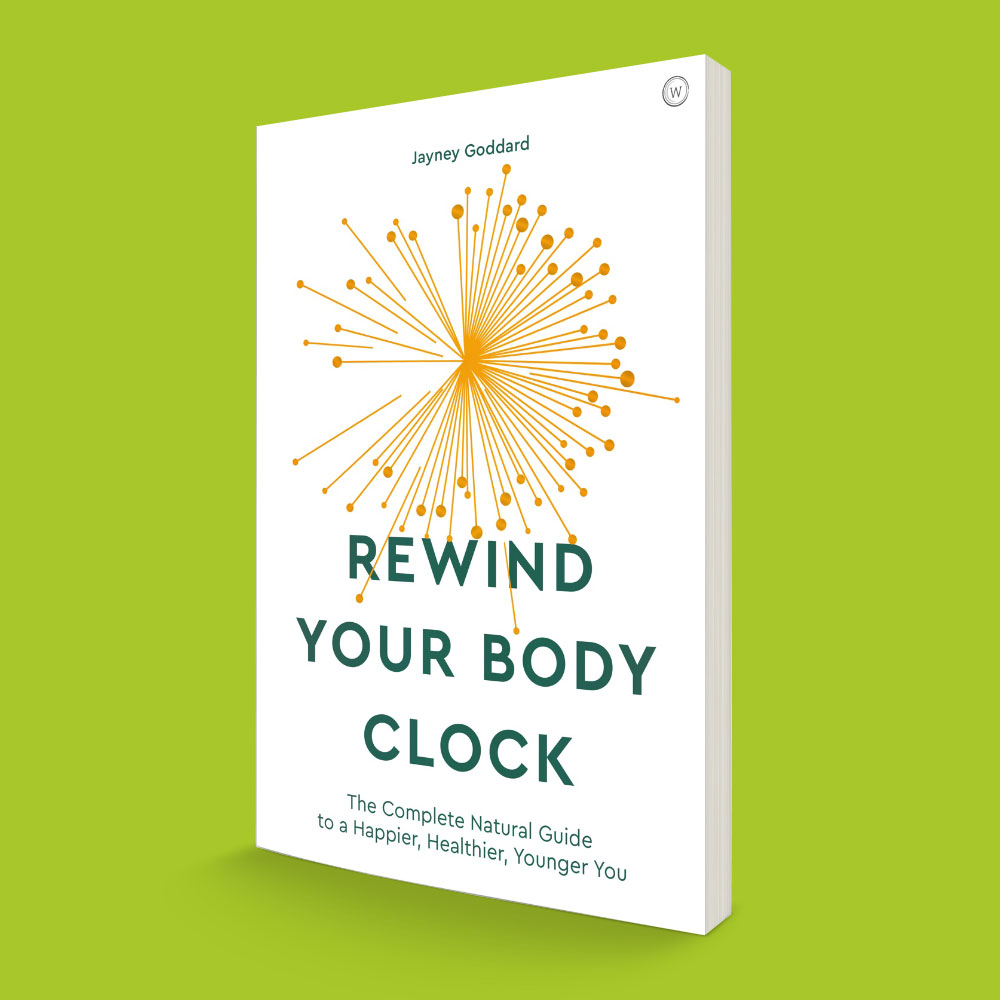
Jayney Goddard MSc, PG Dip Ed, FCMA, FRSM is the Founder and President of The Complementary Medical Association (The CMA), the world’s leading professional body for complementary medicine. With more than three decades at the forefront of complementary and integrative healthcare, Jayney has dedicated her career to raising professional standards across the sector and to championing rigorous, evidence-based natural approaches to health and longevity. She is the author of several best-sellers, including Rewind Your Body Clock – the Complete Natural Guide to a Happier, Healthier, Younger You (Watkins/Penguin Random House), which debuted on the Amazon charts at No. 1 among ALL books on the platform. Jayney is a sought-after international speaker and a passionate advocate for the safe, ethical integration of complementary medicine within mainstream healthcare. Through The CMA, she supports a global community of Practitioners, Fellows, and Approved Suppliers committed to the very highest standards of practice.
Further Reading
- Urolithin A: 5 Breakthrough Discoveries
- Muscle and Longevity
- Bone as an Endocrine Organ
- Five Remarkable Health Benefits of Awe
Medical disclaimer: This article is for educational purposes only and does not constitute medical advice. Always consult a suitably qualified healthcare professional before making significant changes to your diet, exercise routine or supplement regimen, particularly if you have an existing health condition, are pregnant, or are taking medication.