
Dance and Longevity: 7 Astonishing Ways Dancing Rewinds Your Body Clock by Jayney Goddard, MSc, PG Dip Ed, FCMA, FRSM, President, The Complementary Medical Association
I have a confession to make: for the next three weeks, I am running away to dance.
By the time you read this, I shall be packing my dance shoes for Amsterdam – and over the weeks that follow, between some genuinely thrilling projects brewing behind the scenes at The CMA and some precious, protected time with the people I love most, I shall be stepping away from my desk almost entirely. I’ll be back in your inbox in October, rested and full of new things to share.
But before I go, I want to tell you why I’m going – because my trip isn’t simply a holiday. I’m travelling to Amsterdam to immerse myself in one of my greatest loves: fusion belly dance. And that gives me the perfect excuse to share something I’ve wanted to write about for a long time: the extraordinary, science-backed case for dance as one of the most powerful healthspan practices there is.
Regular readers will know that I bang the drum for resistance training as my number-one physical intervention for healthy ageing – and that hasn’t changed. But if resistance training is the foundation of a long healthspan, dance may well be its crowning glory: a practice that trains body, brain and spirit all at once, and feels like pure pleasure while it does so.
7 Astonishing Age-Rewind Benefits of Dance
1. Dancing is linked to a 76% lower risk of dementia
Let’s begin with the finding that first made neuroscientists sit up and take notice, when it comes to dance and longevity. Researchers at the Albert Einstein College of Medicine followed 469 older adults for over five years, tracking which leisure activities were associated with protection against dementia. Among all the physical activities studied – swimming, cycling, golf, group exercise, even housework – only one stood out as significantly protective: dancing. Frequent dancing was associated with a 76% lower risk of dementia – a greater effect than any other activity in the study, physical or cognitive, including reading and doing crossword puzzles.1
A note of scientific honesty here, because you know I insist upon it: this was an observational study, so it demonstrates a powerful association rather than absolute proof of cause. But the size of the effect – and the findings that have followed – make dance impossible to ignore.
2. Dance can grow your hippocampus – the brain’s memory centre
Why should dance be so protective? Neuroscientists believe it’s because dancing is the ultimate “whole-brain” workout: aerobic exercise, continuous learning, memory, musicality, spatial navigation, balance and social connection, all happening simultaneously.
In a landmark German trial, healthy seniors (average age 68) were assigned to either an eighteen-month dance programme – with routines, steps and rhythms deliberately changed every fortnight to keep them learning – or a conventional fitness programme. Both groups showed growth in the hippocampus, the seahorse-shaped brain region essential for memory and one of the first areas to decline with age. But the dancers showed increases in more sub-regions of the hippocampus than the fitness group did.2 In other words: your brain remains gloriously plastic at every age – and dance appears to be one of the very best ways to exploit that.
3. Dance boosts BDNF – “fertiliser” for the brain
The same research group went on to show that dance training in older adults increased levels of brain-derived neurotrophic factor (BDNF) – a growth factor often described as fertiliser for the brain, because it supports the survival of existing neurons and encourages the growth of new connections.3 Their conclusion was elegant in its simplicity: because dance combines physical exertion with rich sensory, cognitive and social stimulation, it delivers more for the ageing brain than repetitive exercise alone.
4. Dance dramatically improves balance – your insurance policy against falls
Here is a statistic I wish more people knew: falls are one of the single greatest threats to independence in later life. And in that German trial, it was only the dancers – not the conventional fitness group – who showed significant, measurable improvements in balance.2 Every shift of weight, every turn, every moment spent moving on one leg is vestibular and proprioceptive training in disguise. Dance teaches your body, week after week, exactly the skills that keep you upright and independent for decades to come.
5. Dance builds posture, core strength and bone-loading – joyfully
Dance is a weight-bearing activity, which means it loads the skeleton in precisely the way our bones need in order to stay strong – while simultaneously demanding an elongated spine, an engaged core and beautifully organised posture. Belly dance in particular is a masterclass in deep core control: those mesmerising isolations and undulations come from layers of abdominal, back and pelvic-floor musculature that most exercise regimes never touch.
6. Dance weaves you into community – and community is medicine
Social connection is one of the most underrated longevity “interventions” we have – and dance is inherently communal. But there is something more precise going on here than simply “not being lonely”, and it is worth spelling out, because from a gerontology perspective it may be one of dance’s most powerful gifts.
When we dance together in a class or a group, we are a community of people working together, socially, towards a common goal – mastering a new combination, polishing a group piece, holding one another up (sometimes literally!) through the learning process. That combination of belonging, shared purpose and mutual endeavour is exactly the pattern that researchers in healthy ageing keep finding among people who thrive in later life. Purpose plus people, week in and week out, is a profoundly protective formula – and a dance class delivers both, wrapped in music.
I must also say a special word here about belly dance in particular, because this is something I have witnessed for years: the environment is extraordinarily accepting and supportive. Every age, every body shape, every level of experience is welcomed and celebrated – there is no “ideal dancer’s body” at the door, and nobody is ever too old to begin. Lifelong friendships are grown in those classes. For many of us, our dance sisters become some of the dearest friends we will ever have – and that, as much as any shimmy, is where the magic lies.
7. Dance delivers joy – and joy is not a luxury
Finally, the benefit that binds all the others together: dance makes us feel alive. Music, movement, self-expression and flow lift mood, dissolve stress and reconnect us with our bodies as sources of pleasure rather than problems to be managed. I have written before about the measurable health benefits of awe and uplifting emotion – and dance is one of the most reliable ways I know to summon them, on demand, at any age.
So What on Earth Is Fusion Belly Dance?
Now to the delicious part – the dance form that is luring me to Amsterdam.
The style I practise is called fusion belly dance. You may also have heard it called “tribal fusion” – though many of us in the dance community have moved away from that name, as the word “tribal” sits uncomfortably with many people and raises legitimate questions of cultural appropriation. “Fusion” is, in any case, the far better word – because fusion is exactly what it is.
At its heart lies classical Egyptian raqs sharqi – the elegant, intricate art form most people know as belly dance, with its shimmering hip work, fluid undulations and centuries of artistry. Into that foundation, fusion weaves:
- Flamenco – the proud carriage, dramatic arms and smouldering intensity of the Spanish tradition;
- Hip hop – sharp isolations, pops and locks that give the style its startling precision;
- Classical Indian dance – sculptural hand gestures, expressive storytelling and exquisite lines.
And then – here is what I adore most about this art form – each dancer injects her own special spice. Some bring contemporary; some bring jazz; some bring theatrical flair. Mine, as long-time readers might guess, is ballet: all those years of port de bras, pliés, and turnout finding a gorgeous new home amid the shimmies and undulations.
Think back to those seven benefits above and you’ll see why fusion is such a healthspan powerhouse. It is physically demanding yet low-impact and kind to joints. It is endlessly challenging to learn – wonderful news for our hippocampi. It builds deep core strength, spinal mobility and balance. It is danced in community. And it is, above all, a joy.
How to Begin Dancing – at Any Age
You do not need to fly to Amsterdam, and you certainly do not need a background in dance. You need only a style that makes your heart sing – belly dance, ballroom, salsa, line dancing, tango, ballet for adults – and a beginner-friendly class. A few gentle suggestions:
- Choose pleasure over performance. The research suggests the magic lies in learning and enjoying – not in being “good”.
- Look for classes that keep teaching you new material. Novelty and challenge are what drive those brain benefits.
- Go with a friend – or go to make friends. The social element is part of the medicine.
- Start where you are. Chair-based and gentle dance classes exist for every level of mobility, and the benefits begin from the very first session.
As for me – I shall think of you as I dance beside the canals. I’ll be back in October with new articles, new science and (I suspect) a few new moves. Until then: keep moving, keep learning and, if the music takes you, keep dancing.
Frequently Asked Questions
Is it too late to start dancing in my 60s, 70s or beyond?
Absolutely not. The key studies on dance and brain health were conducted with adults in their 60s, 70s and 80s – many of whom were complete beginners. The brain remains capable of growth and adaptation throughout life, and the benefits of dance begin whenever you do.
Which style of dance is best for healthy ageing?
The best style is the one you love enough to do regularly. That said, the research suggests the greatest brain benefits come from styles that keep you learning – new steps, new patterns, new music – rather than repeating identical movements each week.
Is belly dance suitable for beginners and for older bodies?
Yes – it is one of the most accessible dance forms there is. It is low-impact, gentle on the joints, adaptable to every body shape and fitness level, and it builds deep core strength, posture and balance from the very first class.
How often should I dance to see anti-ageing benefits?
In the dementia research, the greatest protection was seen in those who danced frequently – several times a week.1 But once a week is a wonderful place to begin, and every session counts.
References
- Verghese J, Lipton RB, Katz MJ, et al. Leisure activities and the risk of dementia in the elderly. New England Journal of Medicine. 2003;348(25):2508–2516. https://doi.org/10.1056/NEJMoa022252
- Rehfeld K, Müller P, Aye N, et al. Dancing or fitness sport? The effects of two training programs on hippocampal plasticity and balance abilities in healthy seniors. Frontiers in Human Neuroscience. 2017;11:305. https://doi.org/10.3389/fnhum.2017.00305
- Müller P, Rehfeld K, Schmicker M, et al. Evolution of neuroplasticity in response to physical activity in old age: the case for dancing. Frontiers in Aging Neuroscience. 2017;9:56. https://doi.org/10.3389/fnagi.2017.00056
Did you know… that I work personally with a small number of private clients each year? If you would love a longevity plan that is truly right and tailored just for you – your health history, your goals, your life – my 1-2-1 Concierge Service may be exactly what you’ve been looking for. Discover how to work with me through my 1-2-1 Concierge Service →
About the Author
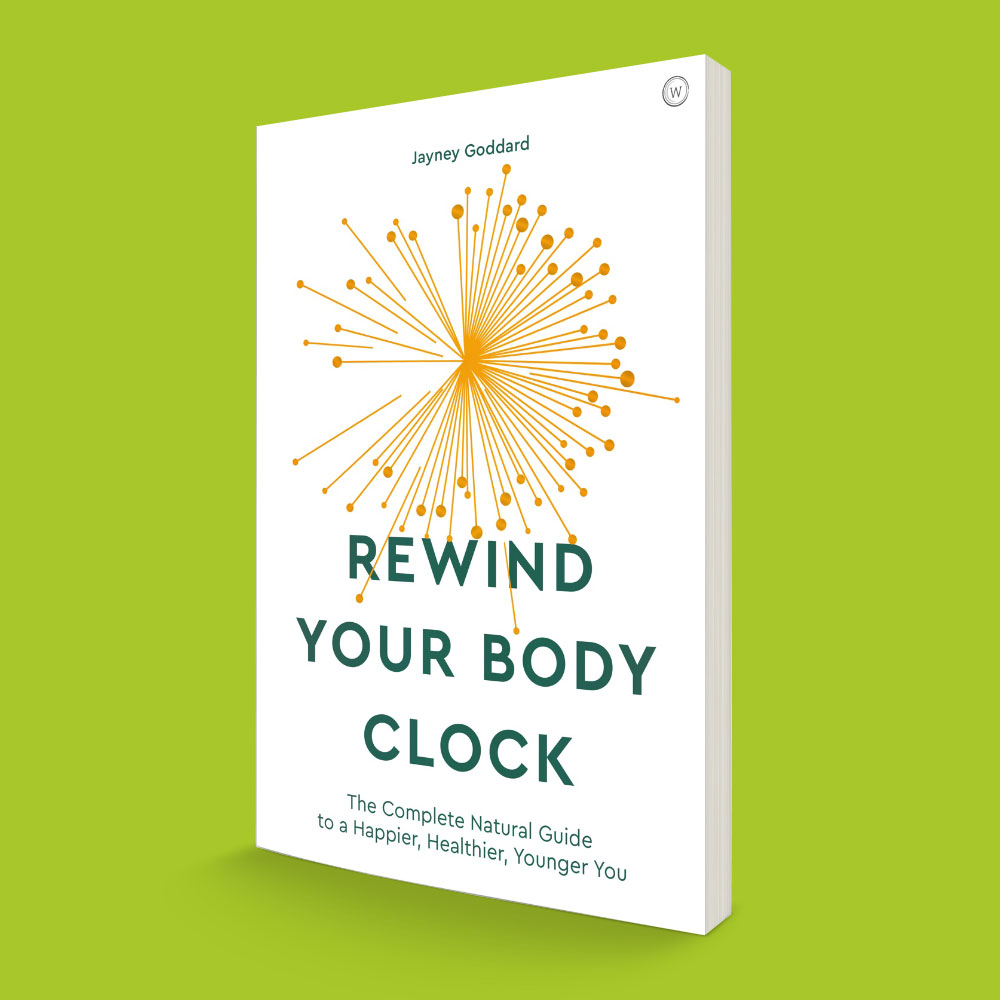
Jayney Goddard MSc, PG Dip Ed, FCMA, FRSM is the Founder and President of The Complementary Medical Association (The CMA), the world’s leading professional body for complementary medicine. With more than three decades at the forefront of complementary and integrative healthcare, Jayney has dedicated her career to raising professional standards across the sector and to championing rigorous, evidence-based natural approaches to health and longevity. She is the author of several best-sellers, including Rewind Your Body Clock – the Complete Natural Guide to a Happier, Healthier, Younger You (Watkins/Penguin Random House), which debuted on the Amazon charts at No. 1 among ALL books on the platform. Jayney is a sought-after international speaker and a passionate advocate for the safe, ethical integration of complementary medicine within mainstream healthcare. Through The CMA, she supports a global community of Practitioners, Fellows, and Approved Suppliers committed to the very highest standards of practice.
Further Reading
- Muscle and Longevity: Why the Most Important Organ of Ageing Is the One You Can Change
- Bone as an Endocrine Organ
- Five Remarkable Health Benefits of Awe
- Urolithin A: 5 Breakthrough Discoveries
Disclaimer: This article is for educational purposes only and does not constitute medical advice. Always consult a suitably qualified healthcare professional before beginning any new exercise programme, particularly if you have an existing health condition, balance concerns or a history of falls.