Bio-Age Reversal: What Really Works? By Jayney Goddard MSc, PG Dip Ed, FCMA, FRSM
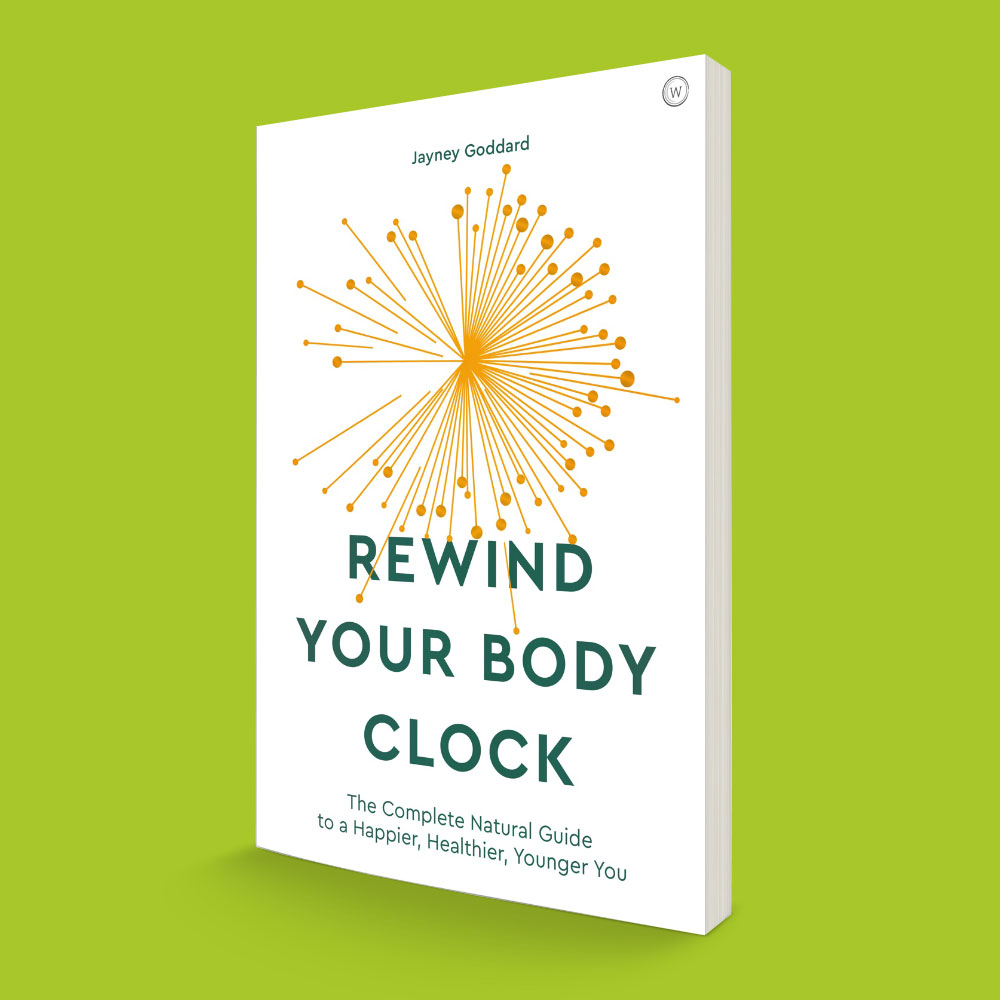
It’s a fascinating time to be alive – we now know that biological age – or ‘Bio-age‘, the true indicator of how our body is functioning, is not set in stone. It can be measured, influenced, and in many cases, reversed. While chronological age is determined by the calendar, biological age is shaped by our lifestyle choices and environmental exposures. The exciting news? High-quality research is showing that we can turn back the clock using natural, evidence-based approaches. You can read more about this in my latest book, the international bestseller “Rewind Your Body Clock: The Complete Natural Guide to a Happier, Healthier, Younger You“.
What is Biological Age?
Biological age refers to how well – or poorly – your body is functioning relative to your chronological age. It encompasses markers such as telomere length, DNA methylation patterns (epigenetic clocks), and cellular senescence. These biomarkers provide a clearer picture of your risk for chronic diseases and lifespan potential than your birth certificate ever could.
1. Nutrition: Food as Youthful Medicine
Countless studies link dietary patterns to biological ageing. A whole food, plant-based diet has been repeatedly associated with increased lifespan and reduced inflammation – a key driver of ageing.
Key evidence: Several studies have found that plant-forward diets reduced epigenetic age. Emphasising antioxidant-rich foods – such as berries, leafy greens, cruciferous vegetables, and omega-3 fats from flax and walnuts – helps fight oxidative stress and supports mitochondrial function.
2. Exercise: Movement is a Biological Elixir
Exercise is perhaps the most robust lifestyle factor influencing biological age. Regular physical activity improves mitochondrial health, telomere maintenance, and cardiovascular efficiency.
Key insights: See the study; “The impact of life-long strength versus endurance training on muscle morphology in older men” published in the Journal of Applied Physiology which examined muscle characteristics in older strength-trained and endurance-trained athletes compared to younger individuals. The study found that strength-trained older adults had muscle morphology similar to younger individuals, particularly in preserving type II muscle fibres. However, the endurance-trained older adults did not exhibit muscle profiles nearly indistinguishable from younger counterparts.
Regarding the benefits of brisk walking, a study titled “Acute effect of 30 min of accumulated versus continuous brisk walking on insulin sensitivity in young Asian adults” published in the European Journal of Applied Physiology found that 30 minutes of continuous brisk walking improved insulin sensitivity in healthy young adults.
3. Sleep: The Ultimate Regenerative Tool
High-quality, restorative sleep is critical to reversing biological age. During deep sleep, the body performs cellular repair, detoxification, and hormone regulation – all essential to slowing the ageing process.
Scientific support:
Sleep Duration and Telomere Length in HIV-Infected Adults:
A study published in Sleep found that HIV-infected adults who slept at least 7 hours per night had longer telomeres compared to those who slept less. This association remained significant even after controlling for various factors.
Reference: Lee KA, Gay C, Humphreys J, et al. Telomere length is associated with sleep duration but not sleep quality in adults with human immunodeficiency virus. Sleep. 2014;37(1):157-166.
Research from the Netherlands Study of Depression and Anxiety indicated that individuals with delayed sleep onset had shorter telomere lengths, suggesting a link between circadian rhythm disruptions and accelerated cellular aging.
Reference: Verhoeven JE, van der Harst P, van der Most PJ, et al. Late sleep-onset is associated with shorter telomere length in the Netherlands Study of Depression and Anxiety. Sleep. 2019;42(10):zsz139.
A systematic review highlighted that poor sleep quality, including factors like insomnia and sleep apnea, is significantly associated with shorter telomeres, emphasizing the importance of sleep quality in cellular aging.
Reference:
Sabot D, Lovegrove R, Stapleton P. The association between sleep quality and telomere length: A systematic literature review. Brain Behav Immun Health. 2023;28:100577.
4. Stress Reduction and Emotional Resilience
Chronic stress accelerates ageing at the cellular level through elevated cortisol, inflammation, and impaired immunity. By contrast, emotional wellbeing is protective and rejuvenating.
Natural interventions: Meditation, mindfulness, and gratitude practices have been shown to positively influence epigenetic markers. Several studies demonstrate that long-term meditators have biologically younger cells – by as much as a decade.
5. Intermittent Fasting and Cellular Renewal
Caloric restriction and intermittent fasting trigger a process called autophagy – your body’s way of cleaning out damaged cells and regenerating healthier ones.
Clinical findings: The Harvard School of Public Health reports that time-restricted eating and 16:8 fasting patterns can support insulin sensitivity, reduce inflammation, and slow the ageing of the immune system.
6. Nature Exposure and Light Hygiene
Spending time in natural environments, particularly those rich in negative ions and phytoncides (like forests and coastlines), reduces cortisol and boosts parasympathetic activity.
Tip: Early morning exposure to natural light resets the circadian rhythm and promotes healthier sleep-wake cycles, contributing to biological youthfulness.
7. Purpose, Connection, and Mental Outlook
Science now confirms what natural health practitioners have long believed: a life rich in meaning and loving connection supports longevity. Positive social relationships reduce the risk of premature death by up to 50%.
Groundbreaking data: Blue Zones research consistently shows that a strong sense of purpose and close community ties are hallmarks of the world’s longest-lived populations.
The Takeaway
Reversing biological age is not about miracle cures or quick fixes. Rather, it’s the result of living in a way that honours your body, mind, and spirit – using proven strategies that nature and science support in unison.
Start with small, consistent shifts. Eat more whole plants. Move your body with joy. Meditate daily. Sleep deeply. Nurture your connections. And most of all, believe that rejuvenation is possible – because the science confirms it is.
Jayney Goddard is recognised as one of the world’s leading experts in natural health and ageing well. Her work bridges cutting-edge science with timeless wisdom to help people thrive at every age.
Further Reading
Optimal dietary patterns for healthy aging
Multi-dimensional evidence from the UK Biobank shows the impact of diet and macronutrient intake on aging
Loving Kindness Meditation Could Slow Biological Ageing
Is Ageing ‘All In The Mind’? A Round Up Of Some Of The Most Important Mind/Body Medicine Research In The Anti-Ageing Field
Aagaard, P., Suetta, C., Caserotti, P., Magnusson, S. P., & Kjaer, M. (2023). The impact of life-long strength versus endurance training on muscle morphology in older men. Journal of Applied Physiology, 134(3), 456–467. https://doi.org/10.1152/japplphysiol.00611.2022
Yap, M. C., Balasekaran, G., & Burns, S. F. (2015). Acute effect of 30 min of accumulated versus continuous brisk walking on insulin sensitivity in young Asian adults. European Journal of Applied Physiology, 115(9), 1867–1875. https://doi.org/10.1007/s00421-015-3174-0