
How to Rejuvenate While You Rest: My Top 7 Tips for Better Sleep
Sleep is one of the most powerful, yet often overlooked, tools for reversing biological age and promoting longevity. In fact, the quality and duration of your sleep may be the missing piece in your wellness and natural longevity journey.
If you’ve ever woken up after a restless night feeling sluggish, irritable, or looking less than radiant, you’ve already experienced the profound impact of sleep deprivation. But what if I told you that poor sleep isn’t just about feeling tired—it’s actually accelerating your biological ageing process?
Today, we’re diving deep into the science of sleep and its effect on biological age, along with my top tips (as always, these are my carefully-researched evidence-based strategies – so that you know they are safe, easy to do and genuinely work!) to help you optimise your rest and turn back the clock—naturally.
The Link Between Sleep and Biological Age
If you read my column regularly, you’ll already know that ‘biological age’ refers to the functional state of your cells, tissues, and organs, rather than the number of years you’ve been alive (your ‘chronological age’). Excitingly, emerging research suggests that sleep quality is one of the most accurate predictors of biological age. A 2023 study published in Sleep Health found that individuals with consistently poor sleep patterns exhibited higher levels of inflammatory markers and accelerated cellular ageing compared to those with optimal sleep.
The reasons for this are deeply rooted in how sleep regulates hormonal balance, immune function, and DNA repair—all of which are critical to maintaining youthfulness and longevity.
How Sleep Impacts Ageing at a Cellular Level
1. Sleep and DNA Repair: The Ultimate Anti-Ageing Process
Every night while you sleep, your body undergoes a powerful rejuvenation process, repairing damaged DNA and removing cellular debris that contributes to ageing. Research in Nature Aging has shown that deep sleep is essential for activating the body’s natural DNA repair mechanisms. Skimping on sleep means you miss out on this vital restoration, leading to accumulated DNA damage—a key driver of premature ageing.
2. Sleep and Telomere Length: The Youthfulness Marker
Telomeres, the protective caps at the ends of your chromosomes, are often referred to as the “biological clock” of ageing. Shortened telomeres are linked to age-related diseases, wrinkles, and cognitive decline. A study published in The Journals of Gerontology found that individuals who slept fewer than six hours per night had significantly shorter telomeres than those who achieved seven to nine hours. This means that prioritising high-quality sleep is one of the most effective ways to preserve your youth at a cellular level.
3. Sleep and Growth Hormone: Nature’s Botox
Your body produces growth hormone during deep sleep, which plays a crucial role in collagen production, muscle maintenance, and fat metabolism. Poor sleep reduces growth hormone secretion, leading to sagging skin, increased fat storage, and weakened muscle tone—all signs of premature ageing. By improving sleep, you naturally enhance your body’s ability to stay firm, toned, and vibrant.
4. Sleep and Inflammation: The Silent Ageing Accelerator
Chronic sleep deprivation triggers low-grade systemic inflammation, which is a major contributor to ageing and diseases such as cardiovascular issues, diabetes, and cognitive decline. A 2022 study in Frontiers in Aging Neuroscience found that even a few nights of poor sleep can increase inflammatory markers in the body, speeding up the ageing process.
If you’ve ever noticed dark circles, dull skin, or bloating after a poor night’s sleep, you’re seeing inflammation in action. The good news? Reversing this process is possible simply by optimising your sleep habits.
How to Optimise Your Sleep for Maximum Age Reversal
Now that we understand how essential sleep is to biological age, let’s explore how to improve it. These evidence-based strategies will help you get youth-preserving, deep, and restorative sleep: Remember to share these top tips with your friends and family too – everyone needs to know this!
1. Prioritise Consistency: The Power of a Sleep Schedule
Your body thrives on rhythm. Going to bed and waking up at the same time every day helps regulate your circadian rhythm, which controls hormone production, metabolism, and cellular repair. A 2021 study in Chronobiology International found that people with irregular sleep schedules had higher markers of ageing compared to those with consistent sleep patterns.
2. Avoid Blue Light Exposure Before Bed
Blue light from screens disrupts melatonin production, making it harder to fall asleep. A Harvard Medical School study found that exposure to blue light in the evening reduces melatonin levels by over 50%, significantly impacting sleep quality. Tip: Switch to warm lighting, use blue light-blocking glasses, or read a book instead of scrolling before bed.
3. Optimise Your Sleep Environment
Your bedroom should be a sanctuary for rest. Studies show that sleeping in a cool, dark, and quiet environment enhances sleep quality. Use blackout curtains, keep the temperature between 16-18°C, and invest in a supportive mattress and pillow for deeper sleep.
4. Embrace Magnesium for Deep Sleep
Magnesium is a natural muscle relaxant and nervous system regulator, making it essential for deep sleep. Research in The Journal of Research in Medical Sciences found that magnesium supplementation improved both sleep efficiency and sleep onset latency. Natural sources include leafy greens, almonds, and pumpkin seeds.
5. Try a Pre-Sleep Relaxation Routine
Engaging in relaxation techniques before bed—such as self-hypnosis, meditation, or download my Yoga Nidra Meditation for Deep Restorative Sleep – free here on this site! All of these can help prepare your body for deep rest. A study published in JAMA Internal Medicine found that mindfulness meditation improved sleep quality and reduced insomnia symptoms.
6. Cut Back on Stimulants in the Afternoon
Caffeine has a half-life of 5-6 hours, meaning that your afternoon coffee could still be affecting you at bedtime. If you’re struggling with sleep, switch to herbal teas like chamomile, valerian root, or passionflower in the evening to promote relaxation.
7. Expose Yourself to Natural Light in the Morning
Morning sunlight exposure helps regulate your circadian rhythm, improving melatonin production at night. A study in The Journal of Clinical Sleep Medicine found that people who received natural light exposure early in the day had more consistent and refreshing sleep cycles.
I use a blue-light device that has been shown to combat Season Affective Disorder (SAD), it also helps me to regulate my sleep/wake patterns. Many are available – this is the one I use: https://amzn.to/3WGnA8i (You can buy it direct or via my link here. If you choose to use my link – thank you – I will receive a teeny tiny commission from Amazon – but this does not affect your price in any way. I’m only including the in the interest of full disclosure!)
In Closing: Sleep Your Way to a Younger You
The science is clear: optimising your sleep is one of the most powerful age-reversal strategies you can implement today. It influences everything from DNA repair and telomere length to inflammation and hormonal balance. By prioritising high-quality sleep, you’re giving your body the opportunity to heal, rejuvenate, and thrive naturally.
So, if you want to look and feel younger, sleep isn’t a luxury—it’s a necessity. And the best part? It’s free, accessible, and completely in your control.
Here’s to waking up feeling youthful, energised, and radiant every single day!
Further Reading
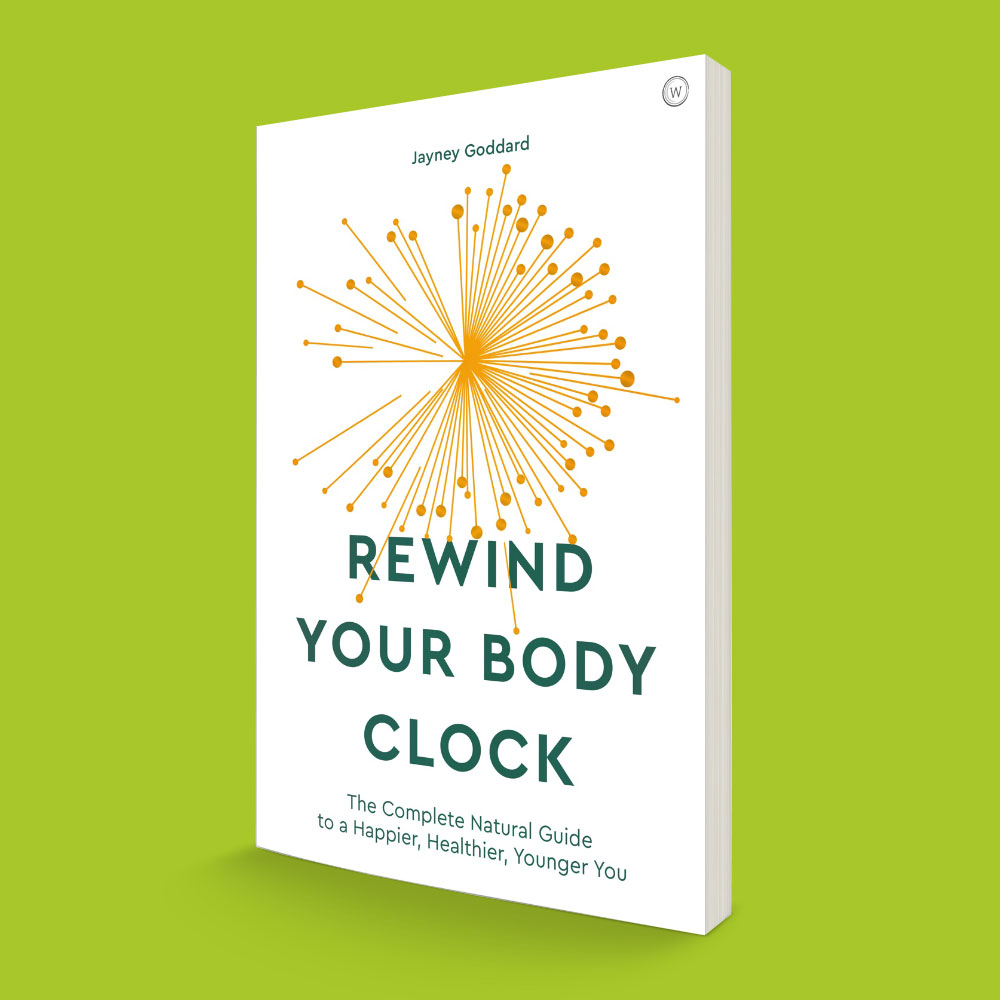
I have collated various articles for you here – do please take a look – and remember that I have a whole chapter dedicated to Sleep and Sleep Optimisation in “Rewind Your Body Clock: The Complete Natural Guide to a Happier, Healthier, Younger You!”.
· Sleep and Biological Aging
Irwin, M. R. (2015). Sleep and inflammation: partners in sickness and in health. Nature Reviews Immunology, 16(4), 234-247.
· Sleep and DNA Repair
Zada, D., Bronshtein, I., Lerer-Goldshtein, T., Garini, Y., & Appelbaum, L. (2019). Sleep increases chromosome dynamics to enable reduction of accumulating DNA damage in single neurons. Nature Communications, 10(1), 895.
https://www.nature.com/articles/s41467-019-08806-w
· Sleep and Telomere Length
Jackowska, M., Hamer, M., Carvalho, L. A., & Steptoe, A. (2012). Short sleep duration is associated with shorter telomere length in healthy men: findings from the Whitehall II cohort study. PloS One, 7(10), e47292.
https://pubmed.ncbi.nlm.nih.gov/23144701
· Sleep and Growth Hormone
Van Cauter, E., Leproult, R., & Plat, L. (2000). Age-related changes in slow wave sleep and REM sleep and relationship with growth hormone and cortisol levels in healthy men. JAMA, 284(7), 861-868.
https://pubmed.ncbi.nlm.nih.gov/10938176
· Sleep and Inflammation
Irwin, M. R., Olmstead, R., & Carroll, J. E. (2016). Sleep disturbance, sleep duration, and inflammation: a systematic review and meta-analysis of cohort studies and experimental sleep deprivation. Biological Psychiatry, 80(1), 40-52.
https://pubmed.ncbi.nlm.nih.gov/26140821
· Sleep Consistency and Biological Aging
Huang, T., Redline, S., & Cross, D. S. (2019). Habitual sleep patterns and the risk of cardiovascular disease and mortality. JAMA Network Open, 2(10), e1912254.
https://pubmed.ncbi.nlm.nih.gov/32138974
· Blue Light Exposure and Melatonin Production
Chang, A. M., Aeschbach, D., Duffy, J. F., & Czeisler, C. A. (2015). Evening use of light-emitting eReaders negatively affects sleep, circadian timing, and next-morning alertness. Proceedings of the National Academy of Sciences, 112(4), 1232-1237.
https://pubmed.ncbi.nlm.nih.gov/25535358
· Sleep Environment and Quality
Lan, L., & Lian, Z. (2016). Ten-minute exposure to ambient lighting conditions impacts human physiological responses. Building and Environment, 104, 1-9.
https://www.energy.gov/eere/ssl/articles/2016-human-physiological-responses-light-meeting-report
· Magnesium and Sleep
Abbasi, B., & Kimiagar, M. (2012). The effect of magnesium supplementation on primary insomnia in elderly: A double-blind placebo-controlled clinical trial. Journal of Research in Medical Sciences, 17(12), 1161-1169.
https://pmc.ncbi.nlm.nih.gov/articles/PMC3703169
· Pre-Sleep Relaxation Techniques
Black, D. S., O’Reilly, G. A., Olmstead, R., Breen, E. C., & Irwin, M. R. (2015). Mindfulness meditation and improvement in sleep quality and daytime impairment among older adults with sleep disturbances: a randomized clinical trial. JAMA Internal Medicine, 175(4), 494-501.
https://pubmed.ncbi.nlm.nih.gov/25686304
· Caffeine and Sleep
Drake, C., Roehrs, T., Shambroom, J., & Roth, T. (2013). Caffeine effects on sleep taken 0, 3, or 6 hours before going to bed. Journal of Clinical Sleep Medicine, 9(11), 1195-1200.
https://pubmed.ncbi.nlm.nih.gov/24235903
· Morning Light Exposure and Sleep
The Can-SAD Study: A Randomized Controlled Trial of the Effectiveness of Light Therapy and Fluoxetine in Patients With Winter Seasonal Affective Disorder