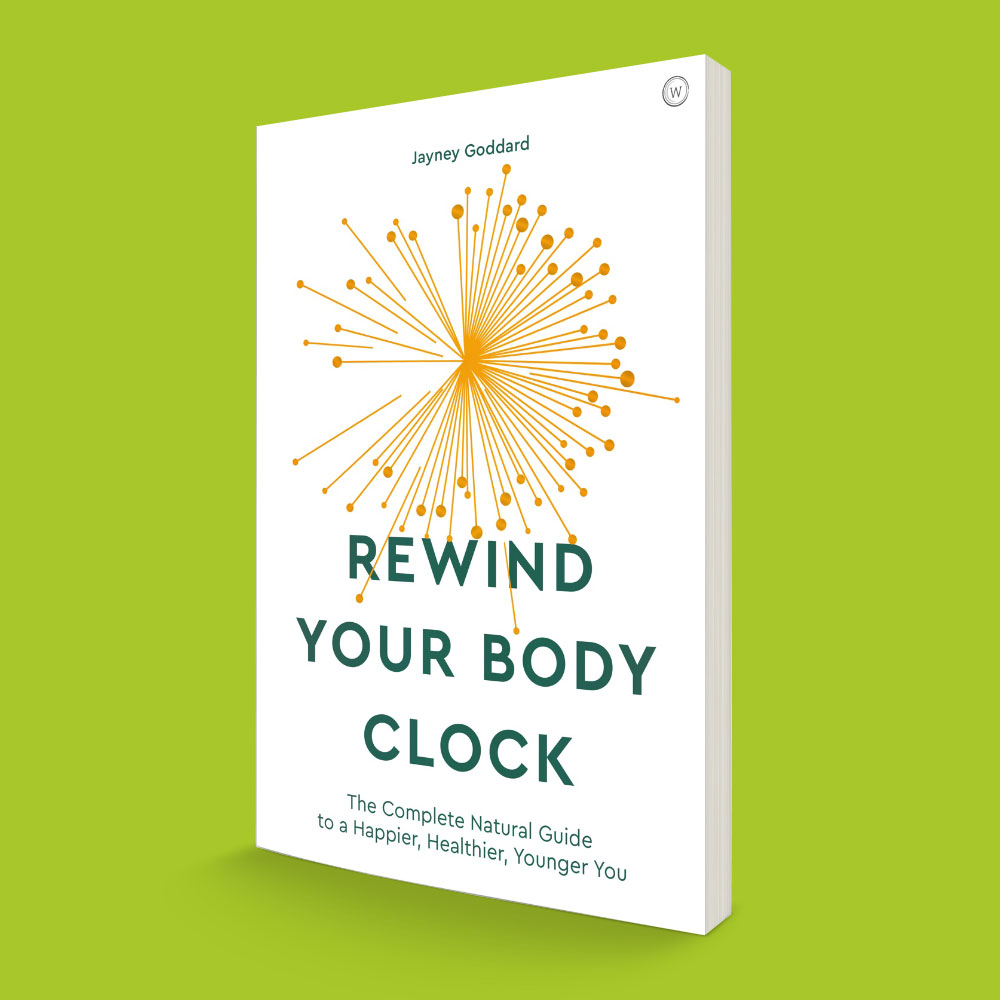

How Chronic Anxiety Ages You: 6 Powerful, Evidence-Based Ways to Rewind the Clock by Jayney Goddard
Anxiety does more than trouble the mind – a growing body of scientific evidence shows that chronic anxiety, and the stress hormones it releases, can quite literally speed up the way your body ages. This article explains the biology connecting anxiety, the stress hormone cortisol, and accelerated ageing at the cellular level, and sets out six powerful, evidence-based ways to protect your body clock – from the right kind of movement to the surprising anti-ageing power of awe. Whether you experience occasional worry or more persistent anxiety, understanding this mind–body connection is one of the most empowering steps you can take for your long-term health and longevity.
We tend to think of anxiety as something that happens purely in the head – a whirl of worried thoughts, a racing heart, a restless night. Yet anxiety is a whole-body event. Every anxious moment sends a cascade of chemical messengers coursing through the bloodstream, and when those moments become the background hum of daily life rather than an occasional alarm, the biological cost begins to mount. The remarkable news, which I want to reach before the end of this article, is that this cost is largely modifiable. Your body is extraordinarily responsive to the choices you make, and the same systems that anxiety wears down can be actively rebuilt.
The stress response: brilliant in the short term, costly over time
When your brain perceives a threat – whether a genuine danger or simply a looming deadline – it activates the hypothalamic–pituitary–adrenal axis, better known as the HPA axis. Within seconds, your adrenal glands release adrenaline and, a little more slowly, cortisol. Your heart quickens, your muscles tense, your senses sharpen, and glucose floods into your bloodstream to fuel a rapid response. This is the celebrated “fight-or-flight” reaction, and in the short term it is a masterpiece of evolutionary design.
The difficulty is that this system was built for occasional, acute emergencies – the proverbial sprint from a predator – not for the chronic, low-grade activation that characterises modern anxiety. When cortisol remains persistently elevated, day after day, it stops being protective and starts being corrosive. Sustained high cortisol has been linked with disrupted sleep, impaired immune function, raised blood pressure, blood-sugar dysregulation, and increased inflammation throughout the body. In other words, the very hormone that saves your life in a crisis can, in excess, quietly undermine it.
The clearest evidence: anxiety and your telomeres
Perhaps the most striking demonstration of how anxiety ages the body comes from research into telomeres. Telomeres are the protective caps at the ends of your chromosomes – often compared to the plastic tips on shoelaces – and they shorten a little each time a cell divides. When they become too short, the cell can no longer divide healthily and enters senescence or dies. Telomere length is therefore one of the most useful biological markers we have of cellular ageing.
In a landmark study published in the Proceedings of the National Academy of Sciences, researchers examined healthy women and found that those experiencing the highest levels of chronic psychological stress had significantly shorter telomeres, lower telomerase activity (the enzyme that repairs and rebuilds telomeres), and higher oxidative stress than those under less strain.1 The difference was sobering: the most stressed women had telomeres comparable to those of women a full decade older. Put simply, chronic stress appeared to have added roughly ten years of cellular ageing.1
This does not mean that anxiety condemns anyone to premature ageing. What it reveals is a mechanism – a biological pathway through which persistent worry “gets under the skin” – and, crucially, a pathway we can influence. The same research programme that uncovered the damage went on to show just how responsive telomere biology is to positive change.
Inflammation and oxidative stress: the slow burn
Alongside telomere shortening, chronic anxiety tends to raise levels of inflammation and oxidative stress. Anxiety nudges the immune system towards a low-grade, smouldering inflammatory state, marked by raised levels of signalling molecules such as interleukin-6 (IL-6). This kind of chronic inflammation – sometimes called “inflammageing” – is increasingly recognised as a common thread running through many age-related conditions, from cardiovascular disease to cognitive decline. Oxidative stress, meanwhile, describes an imbalance between damaging free radicals and the body’s antioxidant defences, and it accelerates the wear and tear on cells, including the erosion of those all-important telomeres. Anxiety, then, does not age us through a single mechanism but through several interlocking ones – which is precisely why a whole-person approach to calming it is so effective.
The empowering part: your body clock can be rewound
Here is where the science turns genuinely hopeful. The biological toll of anxiety is not a one-way street. The same studies that mapped the damage have also shown that targeted lifestyle changes can buffer, slow, and in some measures even reverse these effects. Below are six evidence-based strategies that address anxiety and its ageing effects together – supporting a calmer mind and a more resilient body at the same time.
1. Move your body – gently counts
You do not need to punish yourself in the gym to protect your cells. In a particularly elegant study, researchers found that among people under high stress, those who were sedentary had markedly shorter telomeres – but in those who simply met standard physical-activity guidelines, the link between stress and telomere shortening vanished altogether.2 Exercise, in other words, acted as a biological buffer, neutralising much of the ageing effect of stress. Regular movement also lowers circulating cortisol over time, improves sleep, and releases mood-lifting endorphins. A brisk daily walk, a swim, some gardening, yoga, or dancing all qualify – consistency matters far more than intensity.
2. Feed your nervous system omega-3 fats
What you eat shapes how your body handles stress. Omega-3 fatty acids – found in oily fish, walnuts, flaxseed and algae – are among the most researched nutrients in this field. In a randomised controlled trial, omega-3 supplementation lowered inflammation and oxidative stress and helped preserve telomere length compared with placebo.3 A further controlled study found that omega-3s actually blunted the cortisol and cellular-ageing response to a laboratory stressor, meaning participants’ bodies weathered stress with less biological damage.4. Building a diet rich in omega-3s, alongside plenty of colourful antioxidant-rich plant foods, gives your nervous system the raw materials it needs to stay resilient.
3. Actively seek awe to combat chronic anxiety
This may be the most delightful anti-ageing prescription in science. Researchers measuring positive emotions found that people who experienced more frequent positive feelings had lower levels of inflammatory IL-6 – and of all the emotions studied, awe was the single strongest predictor of lower inflammation.5 Awe – that spine-tingling sense of wonder we feel before a sweeping landscape, a great piece of music, a cathedral, or the night sky – appears to quieten the body’s inflammatory signalling. The wonderful implication is that seeking out beauty and wonder is not a luxury but a genuine health practice. Make room for the things that lift you out of yourself and remind you of the vastness of the world.
4. Protect your sleep above almost everything
Sleep and anxiety exist in a two-way relationship: chronic anxiety disturbs sleep, and poor sleep heightens anxiety and pushes cortisol higher the following day. Deep sleep is also when much of the body’s cellular repair and restoration takes place, so protecting it is one of the most powerful anti-ageing steps available to you. Aim for a consistent bedtime and waking time, dim the lights in the evening, keep screens out of the bedroom, and avoid caffeine from the early afternoon onwards. If a racing mind keeps you awake, a simple wind-down ritual – a warm bath, a few pages of a book, some slow breathing – signals to your nervous system that the day’s alarms can be switched off.
5. Breathe to switch off the alarm
One of the fastest ways to interrupt the anxiety–cortisol cycle is through the breath. Slow, deep breathing – particularly when the out-breath is longer than the in-breath – stimulates the vagus nerve and activates the parasympathetic “rest-and-digest” branch of the nervous system, directly countering the fight-or-flight response and supporting us when subject to chronic anxiety. Even a few minutes of gentle, extended-exhale breathing can lower heart rate and ease the physical grip of anxiety. Practices such as mindfulness meditation, yoga, and tai chi weave this kind of controlled breathing into a broader calming routine, and, done regularly, they help retune the whole stress-response system towards greater equilibrium.
6. Nurture connection and meaning
Human beings are profoundly social creatures, and warm, supportive relationships are one of the strongest buffers against the effects of stress. Time spent with people who make you feel safe and understood lowers cortisol and soothes the nervous system, while a sense of purpose and meaning helps put day-to-day worries into perspective. Cultivate the relationships that nourish you, ask for support when you need it, and invest in the activities and causes that give your life direction. Connection is not a soft extra – it is core biological medicine.
A gentle word
Occasional anxiety is a normal and healthy part of being human. However, if anxiety is persistent, overwhelming, or beginning to interfere with your daily life, relationships, work or sleep, please do reach out for professional support – whether from your doctor or a qualified practitioner. The strategies above are designed to support your overall wellbeing and longevity, and they work most powerfully alongside, not instead of, appropriate professional care when it is needed.
Did you know…
that you can work with me directly? Through the Jayney Goddard Concierge Service, I offer personalised, one-to-one guidance to help you apply the very latest evidence-based, natural approaches to your own health and longevity – including practical, sustainable ways to calm anxiety and protect your body clock. If you would like tailored support on your journey to a happier, healthier, younger you, I would be delighted to hear from you. Discover the Concierge Service on my website.
Frequently Asked Questions
Can chronic anxiety really make you age faster?
Yes – the evidence increasingly suggests so. Chronic anxiety keeps the stress hormone cortisol elevated, which over time is associated with raised inflammation, higher oxidative stress, and shorter telomeres (the protective caps on our chromosomes that are a key marker of cellular ageing).1 Importantly, this ageing effect is not fixed and can be buffered by positive lifestyle changes.
What is cortisol, and why does it matter for ageing?
Cortisol is one of the body’s main stress hormones, released by the adrenal glands as part of the fight-or-flight response. In short bursts it is protective and essential. When it stays persistently high due to chronic anxiety, however, it can disrupt sleep, weaken immunity, raise blood pressure and blood sugar, and promote the inflammation associated with accelerated ageing.
Does exercise really protect against the ageing effects of stress?
Remarkably, yes. Research has shown that in physically active people, the usual link between high stress and shortened telomeres essentially disappears – exercise appears to act as a biological buffer.2 You do not need intense training; meeting standard activity guidelines with brisk walking or gentle movement is enough to make a meaningful difference.
Which foods help the body cope with anxiety and stress?
Omega-3-rich foods such as oily fish, walnuts, flaxseed and algae are especially well supported by research, having been shown to lower inflammation and help protect telomeres and blunt the cortisol response to stress.3,4 A wider diet rich in colourful, antioxidant-dense plant foods, whole grains and adequate protein also supports steady energy and a resilient nervous system.
How quickly can I expect to feel the benefits?
Some strategies – such as slow breathing or a walk in nature – can ease anxiety within minutes. The deeper, cellular benefits of consistent movement, better sleep, and improved nutrition build gradually over weeks and months. The encouraging message from the science is that the body is remarkably responsive, and it is never too late to begin.
About the Author
Jayney Goddard MSc, PG Dip Ed, FCMA, FRSM is the Founder and President of The Complementary Medical Association (The CMA), the world’s leading professional body for complementary medicine. With more than three decades at the forefront of complementary and integrative healthcare, Jayney has dedicated her career to raising professional standards across the sector and to championing rigorous, evidence-based natural approaches to health and longevity. She is the author of several best-sellers, including Rewind Your Body Clock – the Complete Natural Guide to a Happier Healthier Younger You (Watkins/Penguin Random House) which debuted on the Amazon charts at No 1 of ALL books on the platform. Jayney is a sought-after international speaker, and a passionate advocate for the safe, ethical integration of complementary medicine within mainstream healthcare. Through The CMA, she supports a global community of Practitioners, Fellows, and Approved Suppliers committed to the very highest standards of practice.
Further Reading
- Five Remarkable Health Benefits of Awe
- Muscle and Longevity: Why It’s One of the Most Important Investments You Can Make
- Nootropics: Can They Truly Sharpen Your Mind?
References
- Epel ES, Blackburn EH, Lin J, et al. Accelerated telomere shortening in response to life stress. Proceedings of the National Academy of Sciences. 2004;101(49):17312–17315. doi:10.1073/pnas.0407162101 https://doi.org/10.1073/pnas.0407162101
- Puterman E, Lin J, Blackburn E, O’Donovan A, Adler N, Epel E. The power of exercise: buffering the effect of chronic stress on telomere length. PLoS ONE. 2010;5(5):e10837. doi:10.1371/journal.pone.0010837 https://doi.org/10.1371/journal.pone.0010837
- Kiecolt-Glaser JK, Epel ES, Belury MA, et al. Omega-3 fatty acids, oxidative stress, and leukocyte telomere length: a randomized controlled trial. Brain, Behavior, and Immunity. 2013;28:16–24. doi:10.1016/j.bbi.2012.09.004 https://doi.org/10.1016/j.bbi.2012.09.004
- Madison AA, Belury MA, Andridge R, et al. Omega-3 supplementation and stress reactivity of cellular aging biomarkers: an ancillary substudy of a randomized, controlled trial in midlife adults. Molecular Psychiatry. 2021;26(7):3034–3042. doi:10.1038/s41380-021-01077-2 https://doi.org/10.1038/s41380-021-01077-2
- Stellar JE, John-Henderson N, Anderson CL, Gordon AM, McNeil GD, Keltner D. Positive affect and markers of inflammation: discrete positive emotions predict lower levels of inflammatory cytokines. Emotion. 2015;15(2):129–133. doi:10.1037/emo0000033 https://doi.org/10.1037/emo0000033