The Yamanaka Factor Revolution: 4 Breakthrough Genes That Could Reverse Ageing by Jayney Goddard MSc, PG Dip Ed, FCMA, FRSM
I know that you are keen to stay informed about the very latest developments in healthy ageing, longevity, and natural wellbeing – so am I! That’s why I’m sharing this important update on a discovery that could soon transform how we think about ageing itself: Yamanaka factors.
First uncovered by Nobel Prize-winning scientist Shinya Yamanaka, these four remarkable genes have been shown in animal studies to reverse cellular ageing—restoring youthful function in key tissues such as the brain, eyes, and muscles. What’s especially exciting is that researchers are now developing ways to apply this breakthrough safely, with human trials on the near horizon.
In this article, I’ll walk you through what Yamanaka factors are, how they work, and what the very latest research reveals. I’ll also show you how this groundbreaking discovery fits into a wider landscape of anti-ageing strategies—including natural and evidence-based approaches that you can begin using right now to help protect your biological youth.
As the science of epigenetics (the control system that influences how our genes behave) continues to evolve, staying informed puts you in the strongest possible position to take advantage of new developments—while continuing to support your wellbeing naturally, intelligently, and safely.
What Are Yamanaka Factors?
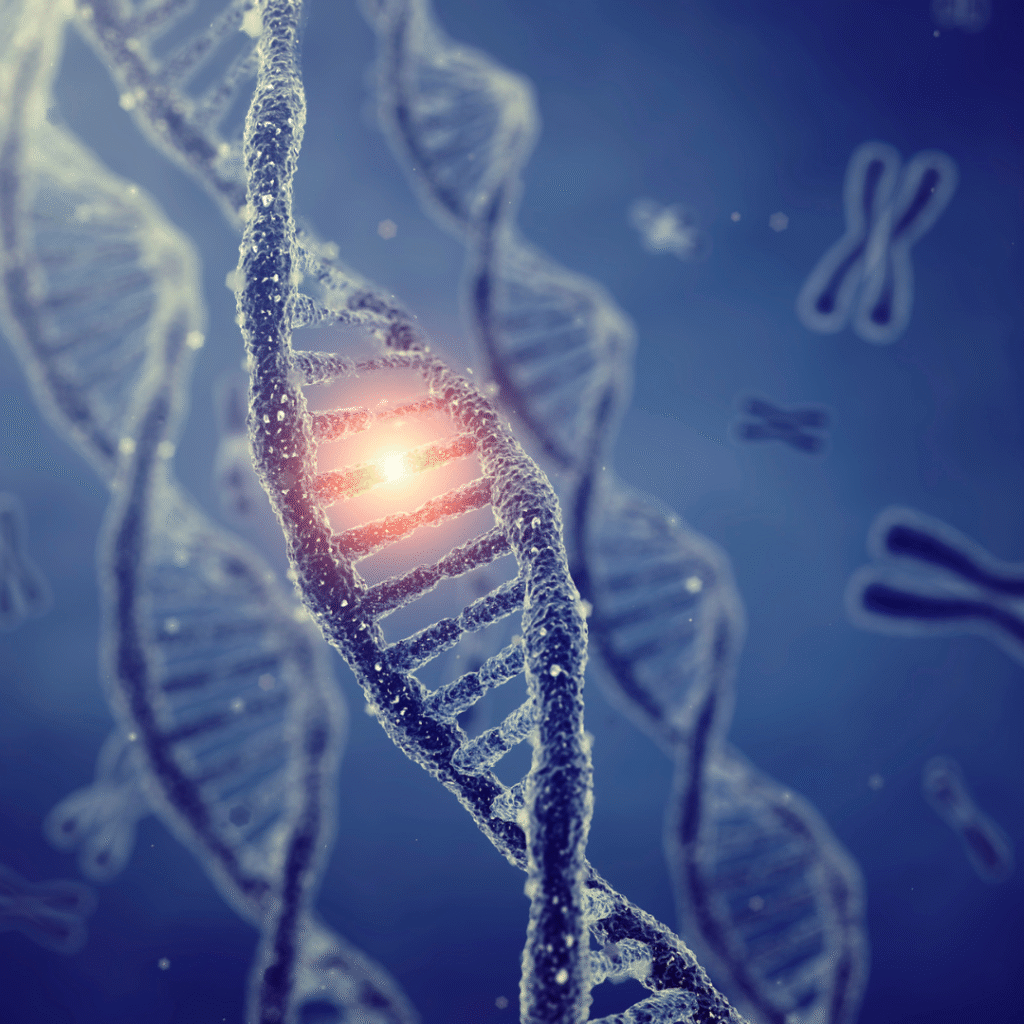
In 2006, Japanese scientist Shinya Yamanaka made a revolutionary discovery: by introducing just four genes into adult cells—OCT4, SOX2, KLF4, and c-MYC—he could turn them back into an embryonic-like state. These four genes are now known as the Yamanaka factors.
Cells treated with these factors become what scientists call pluripotent stem cells (cells that can develop into almost any type of cell in the body). In essence, Yamanaka found a way to “reboot” cells, erasing many signs of ageing and allowing them to regenerate.
This discovery earned him a Nobel Prize—and it laid the foundation for what may soon be the next frontier in anti-ageing medicine.
Rejuvenation Without Rewinding Too Far
Turning an adult cell fully back into a pluripotent stem cell comes with serious risks, including cancer. Scientists now focus on a safer version of this process, called partial reprogramming—using the Yamanaka factors briefly, just enough to rejuvenate cells without making them lose their identity or become cancerous.
Recent Findings:
– A 2024 study published in Nature Communications showed that short bursts of Yamanaka factor activity could reverse cellular ageing markers, but warned that overuse increases genetic instability and cancer risk.
– Another 2024 paper in Communications Biology found that cyclic reprogramming (switching the genes on and off at intervals) improved memory and brain function in mice without negative side effects.
Real-World Applications: Eye and Brain Rejuvenation
Yamanaka’s partner in research, Harvard’s Dr. David Sinclair, led a team that used partial reprogramming to restore vision in aged mice by rejuvenating damaged optic nerves. This was one of the first examples of reversing ageing in living animals.
Further progress in monkeys has brought this work closer to human clinical trials. The biotech company Life Biosciences is now planning to launch human trials using Yamanaka factor gene therapy to treat vision loss.
Partial reprogramming has also shown promise for brain ageing. A 2024 Cell Stem Cell study reversed age-related changes in the neocortex (a brain region involved in memory, attention, and perception).
Another team reported better cognitive function and rejuvenated nerve cells in mice, again using short-term reprogramming. These findings suggest that we may one day treat age-related brain diseases like Alzheimer’s by rejuvenating brain tissue directly.
Why Ageing Happens: A Focus on Epigenetics
Yamanaka factor research focuses on epigenetics—the layer of instructions that sits on top of our genes and controls which ones are switched on or off. As we age, this control system becomes more chaotic, like a scratched record. Partial reprogramming appears to reset these instructions, helping cells behave more youthfully.
Complementary Anti-Ageing Approaches
While Yamanaka-based therapies are powerful, other approaches are being explored to slow or reverse ageing—especially when used in combination.
1. Senolytics: Removing “Zombie Cells”
As we age, some cells stop dividing but don’t die. These senescent cells (damaged cells that remain in the body and trigger inflammation) are linked to many age-related diseases. Senolytic drugs selectively destroy these cells.
2. NAD+ Boosters: Cellular Energy and Repair
NAD+ (nicotinamide adenine dinucleotide) is a molecule essential for energy production and DNA repair. Our levels of NAD+ fall with age. Supplements like NMN (nicotinamide mononucleotide) and NR (nicotinamide riboside) aim to restore it.
3. Epigenetic Age Tests
New blood tests like DunedinPACE and GrimAge estimate your biological age—how old your body acts, rather than your calendar age. These tools are becoming important for testing how well anti-ageing therapies are working.
4. Bio Age Tests
There is an easy and cost-free way for you to monitor your age rewind progress. Head to the top of this page and click on my “Bio Age Tests” tab. Here, you’ll find an array of tests that you can do – at home – that will allow you to monitor how well your natural biological age rewind strategies are working.
Where Are We Now?
We are still in the early stages of applying Yamanaka factors to humans, but progress is moving fast:
– Mice Studies: Reversed ageing in eyes, brain, muscles
– Monkey Studies: Restored vision and nerve function
– Human Trials: Planned for vision loss and other conditions
– Long-Term Safety: Ongoing study to reduce cancer risks
What Are the Risks?
Using powerful genes like c-MYC comes with a risk of cancer, as this gene can drive uncontrolled cell growth. Researchers are testing modified combinations of Yamanaka factors—sometimes leaving out c-MYC—to lower this risk.
There are also concerns about:
– Genetic instability (accidental mutations in the DNA)
– Delivery challenges (getting the right genes to the right cells safely)
– Immune reactions (the body attacking treated cells)
These hurdles mean most therapies will first be tested on age-related diseases, rather than on healthy individuals simply seeking to live longer.
The Big Picture: Reprogramming Meets Lifestyle
Even if full age reversal is years away, you can already support your body’s own anti-ageing processes through proven lifestyle choices:
– Regular exercise boosts stem cell activity and slows epigenetic ageing.
– A plant-based, Mediterranean-style diet supports healthy cell function.
– Good sleep, stress reduction, and fasting may help preserve NAD+ and support healthy longevity.
Combining these habits with new tools like epigenetic monitoring, senolytics, and (eventually) safe reprogramming therapies could lead to a future where people live not just longer, but healthier and sharper for decades more.
Why All This Matters
Yamanaka factors are helping scientists rewrite the rules of ageing. By reprogramming cells—gently and in short bursts—we may one day repair age-damaged tissues, treat chronic diseases, and even reverse biological ageing in specific organs like the eyes or brain.
Clinical trials are on the horizon, and complementary approaches like NAD+ boosters and senolytic drugs are being tested now. Combined with lifestyle medicine, these breakthroughs point toward a future where growing older doesn’t have to mean growing weaker.
The dream isn’t immortality—it’s healthspan: living better, longer.
Let me know what you think of this article below and join in the conversation over at Rewind Your Body Clock
References
Lu, Y., Brommer, B., Tian, X., Krishnan, A., Meer, M., Wang, C., Vera, D.L., Zeng, Q., Yu, D., Bonkowski, M.S., Yang, J., Zhou, S., Zhang, H., Qu, J., Lu, Y., Wang, A., Suh, Y., Yang, C., Andres, D.A., Karg, M.M., Schultz, M.B., Kane, A.E., Davidsohn, N., Yang, X. and Sinclair, D.A., 2021. Reprogramming to recover youthful epigenetic information and restore vision. Nature, 592(7855), pp. 605–611.
https://www.nature.com/articles/s41467-021-23353-z
Jung, S.H., Lee, S., Lee, H., Park, J.S., Lee, J. and Kim, H.S., 2024. Cyclic OSKM expression enhances cognitive function by promoting neural plasticity and rejuvenating epigenetic markers in the aged brain. Communications Biology, 7, Article 328.
https://www.nature.com/articles/s42003-024-06328-w
Zhang, Y., Wang, Y., Xiao, X., Zhou, Y., Cheng, Y., Zhang, W., Qian, Y. and Qian, H., 2023. Partial reprogramming improves DNA damage and epigenetic aging in a mouse model of progeria. Frontiers in Aging, 4, 1323194.
https://www.frontiersin.org/articles/10.3389/fragi.2023.1323194/full
Ledford, H., 2023. Chemical-only approach to cell rejuvenation marks major step in anti-ageing research. Nature News, 619, pp. 482–483.
https://www.nature.com/articles/d41586-023-02275-9