
Meditation and Its Cognitive Benefits: A Vital Strategy for a 24/7 World
In our always-on, hyperconnected world, finding mental clarity can feel impossible. With endless notifications, digital overload, and the demands of daily life, many of us struggle with focus, memory, and mental resilience. But what if there was a simple, scientifically-backed way to enhance cognitive function, improve memory, and restore focus—without medication or expensive interventions?
Meditation is that solution. As a qualified Zen Meditation teacher, I have seen first-hand the remarkable benefits of meditation, not only in my own life but in that of my students. Science is now catching up with what ancient traditions have known for centuries—regular practice can rewire the brain, boost cognitive performance, and help us thrive in an overstimulated world.
In this article, we’ll explore meditation and its cognitive benefits and how this enhances brain function, review the latest studies on its impact on memory and focus, and—most importantly—look at how you can integrate this life-changing practice into your daily routine with ease.
The Science of Meditation and Cognitive Function
The human brain has an extraordinary ability to adapt and change—a phenomenon known as neuroplasticity. Meditation, particularly mindfulness and focused-attention practices, harnesses this adaptability to strengthen neural pathways, enhance memory, and improve concentration.
A groundbreaking study published in Nature Neuroscience (Tang et al., 2015) demonstrated that just two weeks of consistent practice significantly improved participants’ working memory and cognitive flexibility. Other studies have shown that long-term meditators have larger grey matter volume in key areas of the brain associated with learning, memory, and emotional regulation.
So what exactly is happening in the brain when we meditate?
1. Meditation Enhances Memory by Strengthening the Hippocampus
The hippocampus is the brain’s memory centre, responsible for learning and retaining new information. Research published in NeuroImage (Luders et al., 2013) found that regular meditation increases grey matter density in the hippocampus, improving both short-term and long-term memory. This is especially significant as we age, as hippocampal atrophy is linked to cognitive decline and conditions like Alzheimer’s disease.
2. Meditation Improves Focus by Regulating the Prefrontal Cortex
Meditation and Its Cognitive Benefits: The prefrontal cortex is responsible for executive function—our ability to focus, plan, and regulate emotions. A study in Cognitive, Affective & Behavioral Neuroscience (Zeidan et al., 2010) revealed that as little as four days of meditation practice enhanced participants’ ability to sustain attention on demanding cognitive tasks. Meditation helps regulate activity in this region, allowing us to filter out distractions and maintain mental clarity.
3. Meditation Reduces Stress to Prevent Cognitive Decline
Chronic stress floods the brain with cortisol, a hormone that, in excess, damages neurons and impairs memory formation. A study published in Psychosomatic Medicine (Creswell et al., 2014) found that mindfulness meditation reduces cortisol levels, helping to protect the brain from stress-induced damage. By cultivating a calmer mind, we can enhance cognitive function and safeguard mental sharpness.
How to Integrate Meditation into Your Daily Life
One of the biggest misconceptions about meditation is that it requires hours of practice or a completely silent mind. The reality? Even five to ten minutes a day can yield powerful cognitive benefits.
Here’s how to get started, even if you’re a complete beginner:
1. Start with Just Five Minutes
Think of meditation like exercise for the brain. Just as you wouldn’t run a marathon without training, start with small, manageable sessions. Set a timer for five minutes, sit comfortably, and focus on your breath. Gradually increase your practice over time.
2. Use Guided Meditations
If you find it difficult to sit in silence, guided meditations can be incredibly helpful. Apps like Headspace, Insight Timer, and Calm provide structured sessions designed to enhance focus and mental clarity.
3. Try a Focused-Attention Meditation
A simple and effective meditation for boosting cognitive function is focused-attention meditation. Here’s how to do it:
- Choose a single point of focus (e.g., your breath, a candle flame, or a mantra).
- When your mind wanders (which it will!), gently bring your attention back to your chosen focus.
- Repeat for a few minutes daily, gradually extending your practice.
4. Use Meditation to Transition Between Tasks
Many of us struggle with task-switching fatigue, where shifting from one activity to another drains mental energy. Try a 2-minute meditation between tasks—simply close your eyes, take deep breaths, and reset your focus.
5. Meditate Before Bed for Memory Consolidation
The brain consolidates memories during sleep. A 10-minute meditation before bed can help calm mental chatter, making it easier for the brain to encode and store new information. Try body scan meditation or progressive relaxation to unwind before sleep.
Why Meditation is a Vital Healthcare Strategy
In my years of teaching Zen Meditation, I have seen students transform—not just in their ability to focus and retain information but in their overall mental resilience, emotional regulation, and stress management.
With scientific studies validating what ancient traditions have taught for millennia, it is clear that meditation is not just a wellness trend—it is an essential healthcare strategy. In a world where cognitive overload is the norm, meditation offers a simple, accessible, and profoundly effective way to preserve brain health, enhance focus, and support lifelong mental vitality.
Final Thoughts: Your Brain is Worth It
If you’ve ever felt scattered, forgetful, or mentally drained, meditation could be the key to unlocking a sharper, more focused mind. It doesn’t require special equipment, and you don’t need hours of practice to reap the benefits. Just a few minutes a day can lead to measurable improvements in memory, attention, and overall cognitive performance.
So, why not start today? Take five minutes, close your eyes, breathe, and give your brain the rest—and the power—it deserves.
Further Reading and Resources
I have a lot of really helpful articles here on this site that discuss the benefits of meditation – including:
Complementary Therapies that Boost Your Youth Quotient (YQ)
You also might want to take a look at The Greater Good Science Center at the University of California, Berkeley, one of the world’s leading institutions of research and higher education, the GGSC is unique in its commitment to both science and practice: Not only do they sponsor groundbreaking scientific research into social and emotional well-being, they help people apply this research to their personal and professional lives.
The Greater Good Science Center
Finally, if you haven’t done so already, please feel free to download my Relaxation Response instructional meditation here on my site.
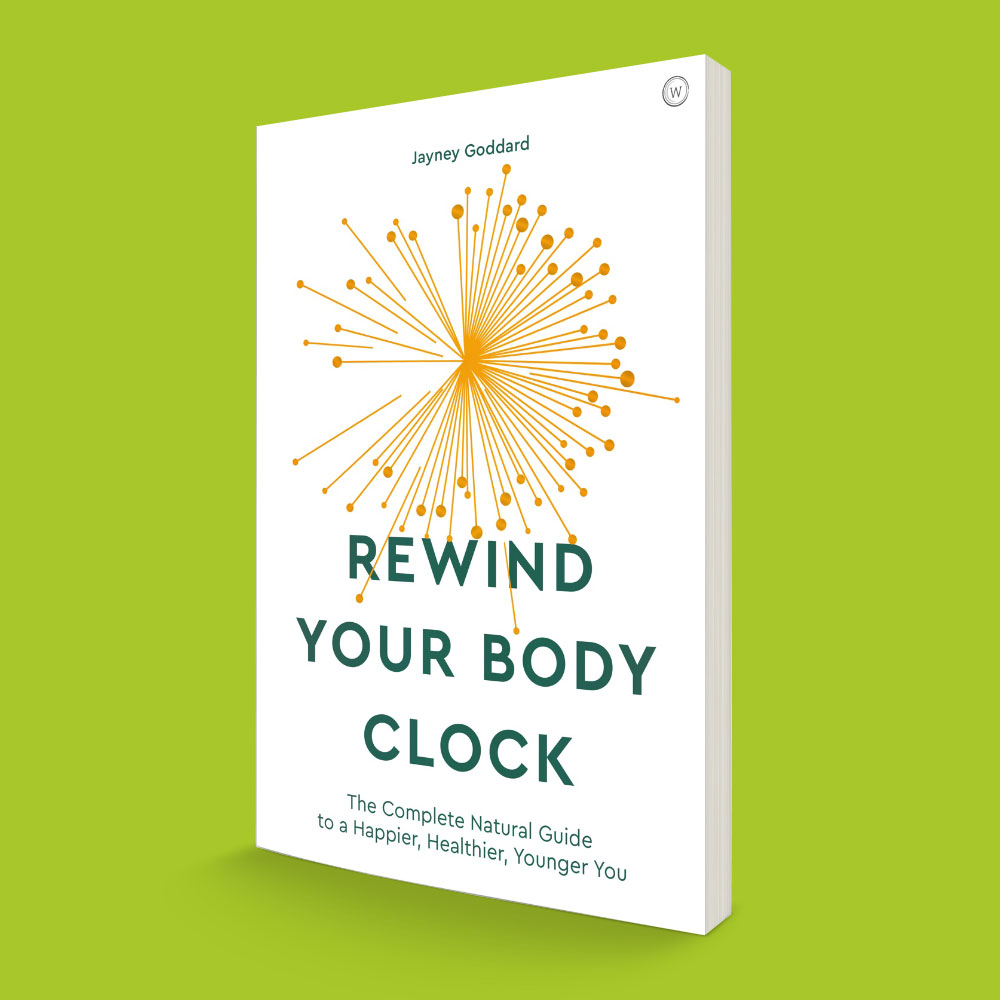
Please let me know which of the suggestions above you will try – and please let me know how you get on – or if you have any questions. You can leave these below and join in more of the conversation in my Facebook Group “Rewind Your Body Clock”
With love,
Jayney xoxo